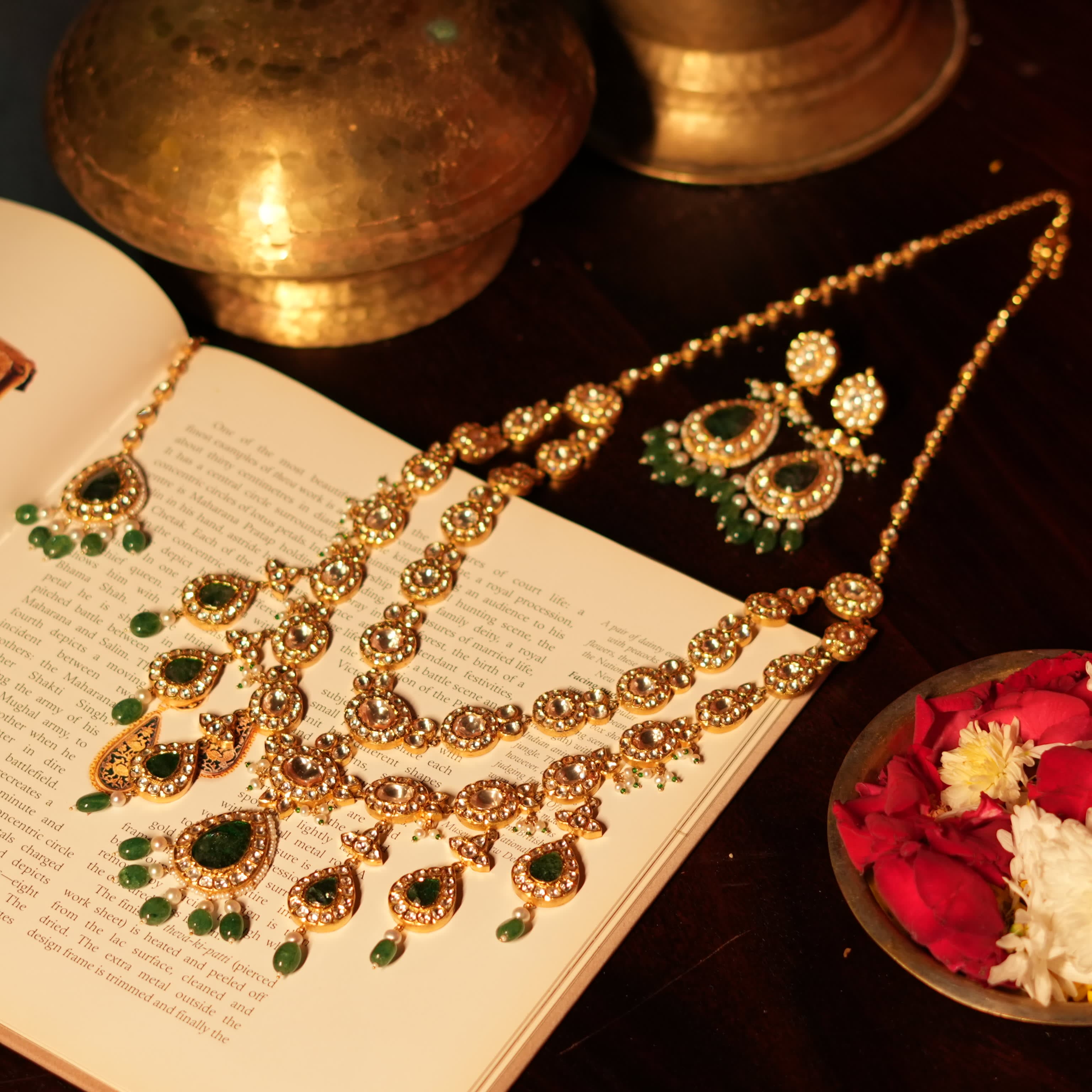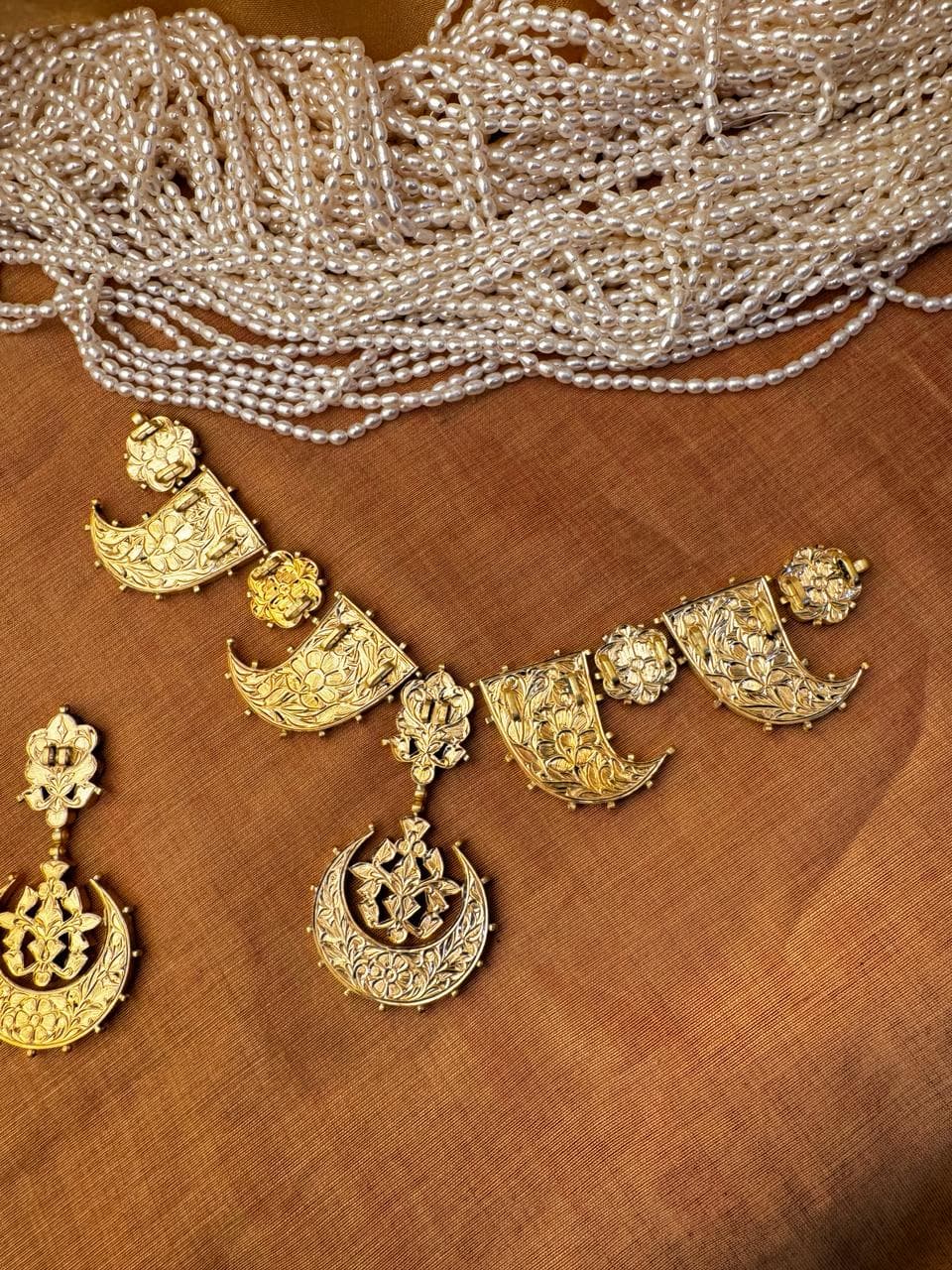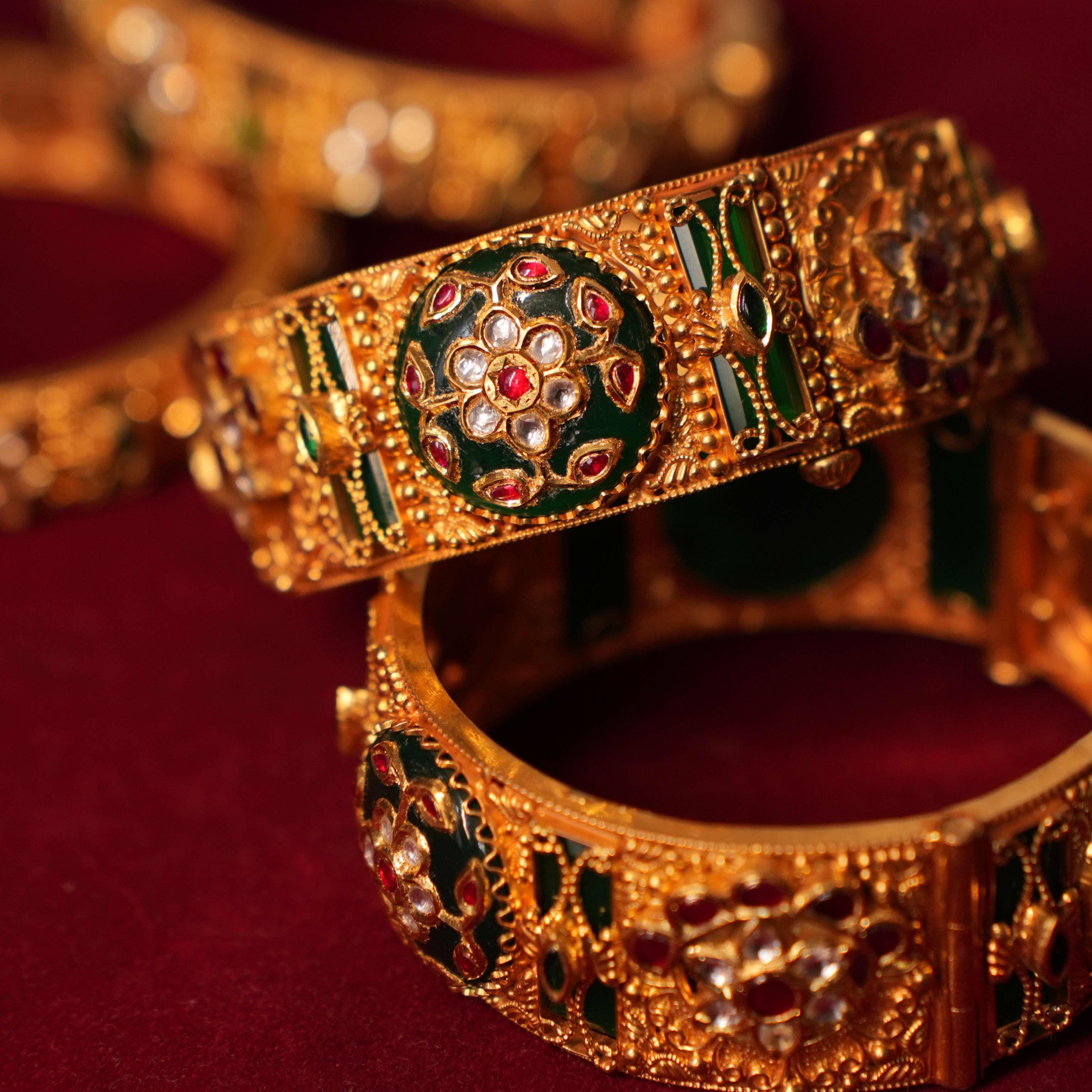
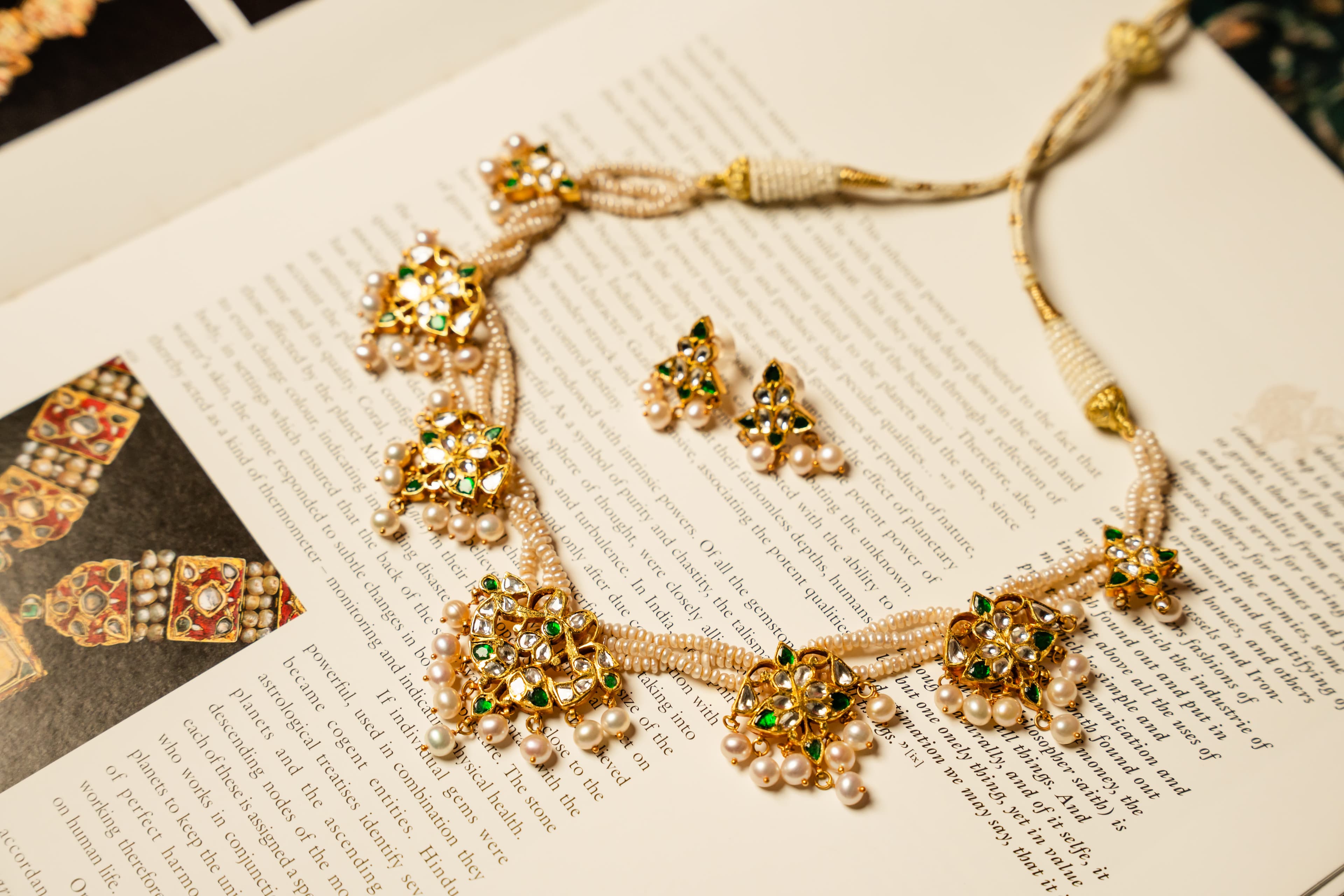
In the hierarchy of Indian bridal jewellery, no piece commands attention quite like the rani haar. Translating literally to "queen's necklace," this multi-layered, long necklace has been a symbol of royal status for centuries. It is not simply worn - it is bestowed, inherited, and revered.
Mughal and Rajput Court Origins
The rani haar emerged from the jewellery traditions of the Mughal and Rajput courts, where the length and elaborateness of a necklace directly signalled the wearer's rank. Queens and senior consorts wore the longest, most layered pieces - sometimes reaching below the waist - while court attendants wore simpler, shorter versions.
In Rajasthani royal portraits, the rani haar is a recurring element, often depicted in exquisite detail: multiple strands of gold, polki, and pearls cascading across the chest, frequently anchored by a large central pendant. These necklaces were not just ornaments - they were treasury assets, diplomatic gifts, and symbols of political alliances.
Anatomy of a Rani Haar
A traditional rani haar typically features several defining elements:
Multiple layers - Unlike a single-strand necklace, the rani haar comprises two to five cascading layers, each slightly longer than the one above. This creates a dramatic, dimensional effect against the chest.
Central pendant - Most rani haars feature a prominent central pendant, which can take the form of a large polki stone, a floral motif, or an elaborate jadau setting. This pendant anchors the visual weight of the piece.
Repeated motifs - Flora (lotus, jasmine), fauna (peacocks, parrots), and geometric patterns recur across the layers, creating a visual rhythm that ties the piece together.
Pearl or bead spacers - Between the gold and stone elements, strings of pearls, emerald beads, or ruby beads provide visual breathing room and add colour depth.
Rani Haar vs Sita Haar vs Long Mala
These terms are sometimes used interchangeably, but there are distinctions worth understanding:
Rani haar refers specifically to a multi-layered, elaborate long necklace - the most formal and regal of the three.
Sita haar is typically a simpler, single or double-strand long necklace, often in gold with minimal stone work. It takes its name from the goddess Sita and is associated with purity and devotion.
Long mala is a general term for any long necklace, including beaded chains, simple gold chains, and temple jewellery styles.
Bridal Layering with the Rani Haar
The modern Indian bride typically layers the rani haar with a choker or aadh (a Rajasthani choker) to create visual depth. The choker sits at the throat, defining the neckline, while the rani haar falls to the mid-chest or below, creating a cascading effect. This combination is particularly powerful with deep necklines and off-shoulder blouses, where the jewellery fills the décolletage with colour and light.
When layering, ensure the two pieces are in visual harmony - if the choker is heavily set with polki, the rani haar should complement rather than compete. Many brides commission both pieces together to ensure a cohesive design language.
Investing in an Heirloom Rani Haar
A rani haar is one of the most significant jewellery investments a family makes. Because of its size and complexity, the gold weight alone is substantial, and when set with polki diamonds and precious stones, the value increases considerably.
At SHRIVATSA, our rani haars are designed to be worn across generations. We work with each bride to ensure the proportions suit her frame, the weight is distributed comfortably, and the design reflects her family's aesthetic. Every rani haar we create is a conversation between heritage and the bride's own vision - a necklace fit for a queen, crafted for her.