Few pieces of jewellery carry the visual drama and cultural weight of the chandbali. The name itself tells you everything you need to know: chand means moon, bali means earring. It is, quite literally, a moon you wear at your ear - a crescent of gold, stones, and light that has adorned Indian women for centuries.
Mughal-Era Origins
The chandbali's origins trace back to the Mughal courts of the 16th and 17th centuries, where jewellery was not merely adornment but a language of status, taste, and allegiance. Mughal miniature paintings from this era frequently depict royal women and courtesans wearing large crescent-shaped earrings, often paired with elaborate headpieces and layered necklaces.
The Mughal aesthetic prized symmetry, celestial motifs, and the interplay of uncut diamonds with coloured stones - all of which find their purest expression in the chandbali. As Mughal influence spread across the subcontinent, the design was adopted and adapted by Rajput, Deccani, and Nawabi courts, each adding their own regional character.
Traditional Construction
A classic chandbali is built around a central crescent frame, typically in 22KT or 24KT gold. The construction involves several distinct elements:
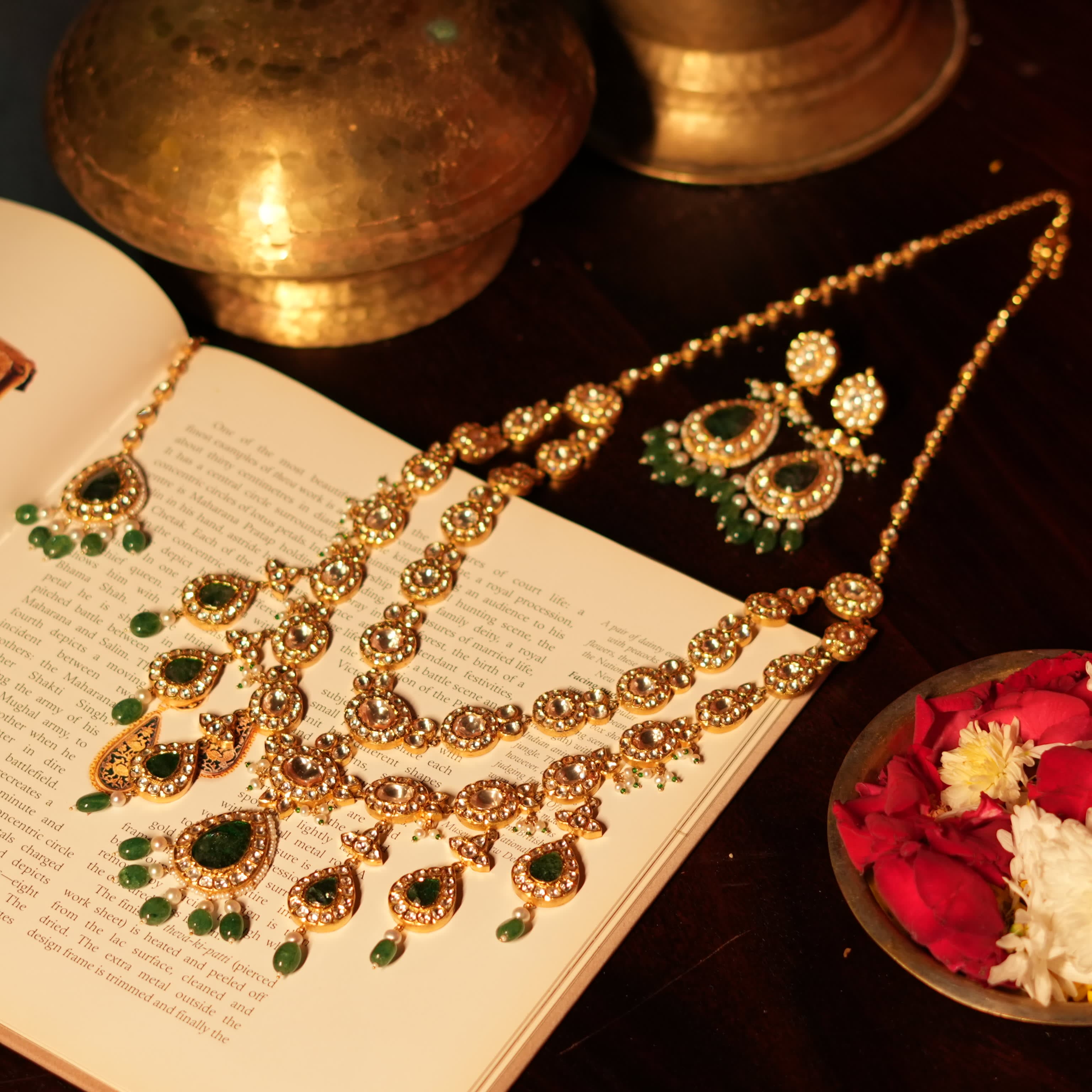
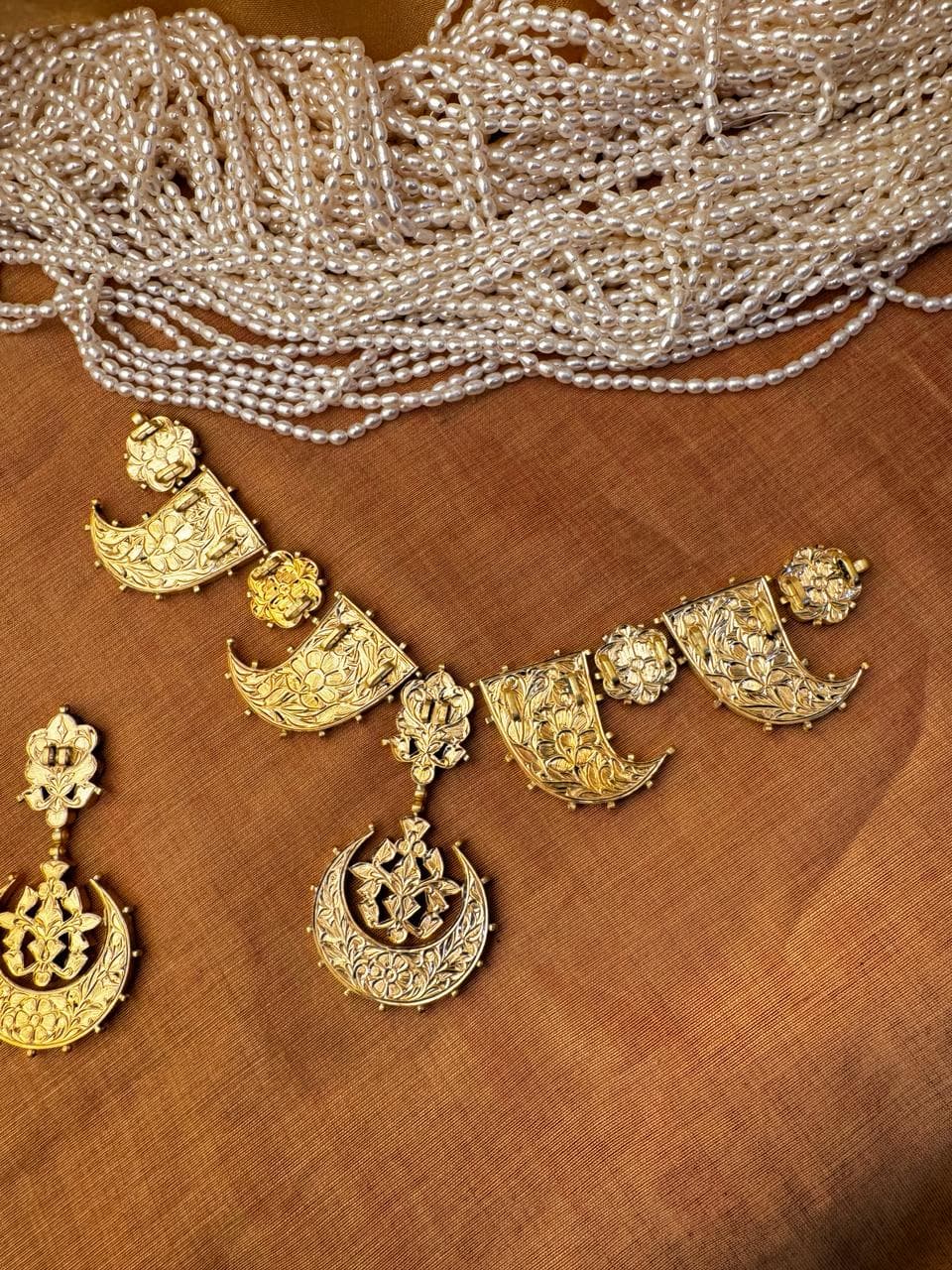
The crescent (chand) - The defining feature. This half-moon shape is formed from hammered gold and serves as the canvas for stone settings. In jadau chandbalis, polki diamonds are set directly into this crescent using the traditional paadh technique.
The stud (tops) - The upper portion that passes through the ear. In elaborate designs, the stud itself is a jewelled disc or floral motif that adds another layer of visual interest.
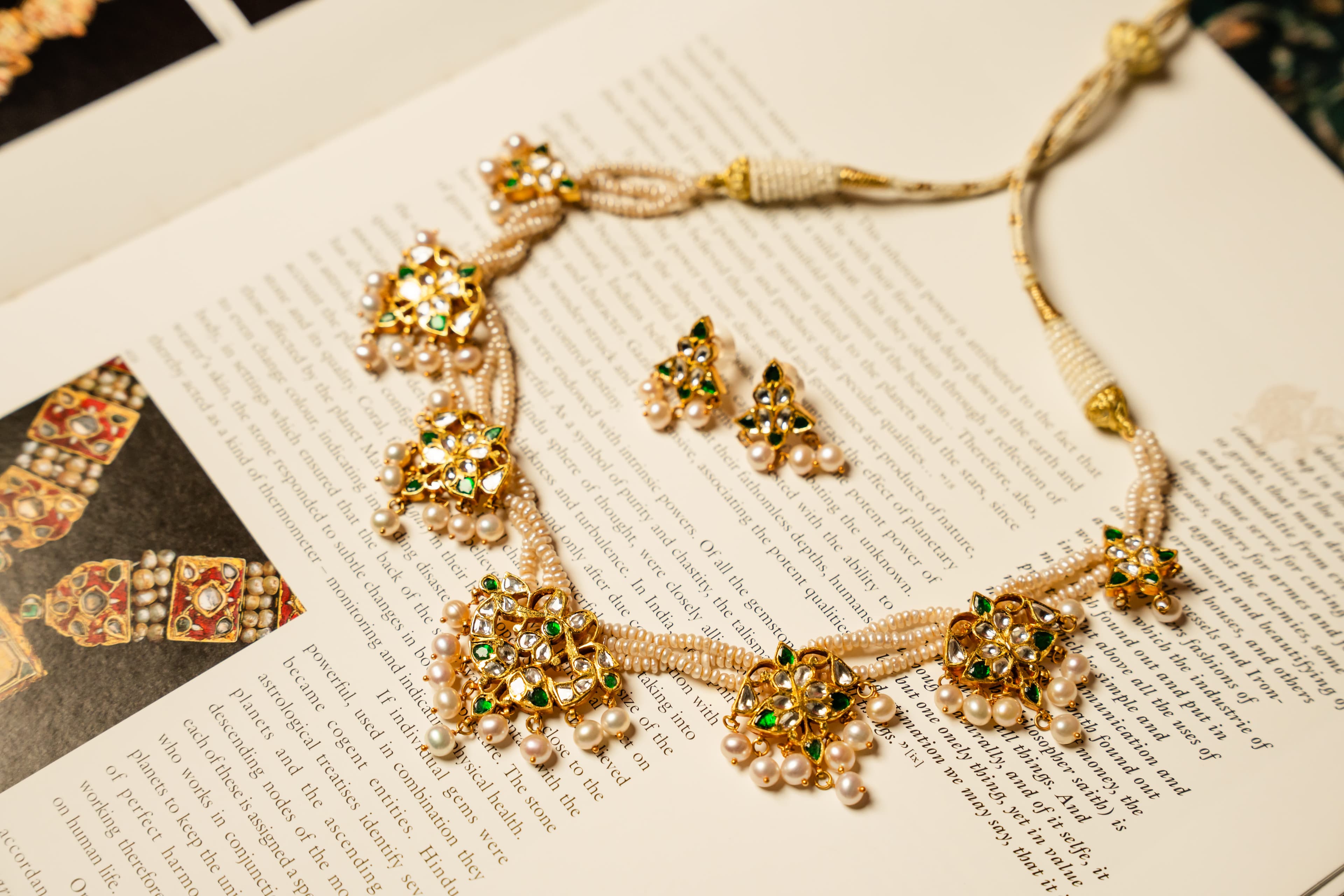
Pearl drops - Strings of natural or cultured pearls hang from the lower edge of the crescent, adding movement and a soft, feminine quality. The gentle sway of these drops is part of what makes chandbalis so captivating.
Meenakari reverse - True heritage chandbalis feature hand-painted enamel work on the back, transforming the hidden surface into a canvas of colour.
Regional Variations
Jodhpuri chandbalis tend to be substantial, with heavy polki work across the crescent and elaborate meenakari in reds and greens on the reverse. They reflect the bold aesthetic of Marwar craftsmanship.
Hyderabadi chandbalis are often more delicate, featuring filigree work and a lighter construction. The Nizami tradition favours pearls prominently, sometimes layering them in cascading tiers below the crescent.
Bikaneri chandbalis are known for their lacquer work and distinctive colour palette, often incorporating pink and white meenakari that distinguishes them from their Jodhpuri cousins.
Styling Chandbalis Today
The beauty of chandbalis lies in their versatility. A bridal chandbali in full polki regalia is the perfect companion for a wedding lehenga or heavy silk saree. But a lighter chandbali - perhaps in 18KT gold with a simpler stone arrangement - works beautifully with a linen saree, a kurta set, or even a structured Western dress.
The key to styling chandbalis with modern outfits is to let them be the hero piece. Keep necklaces minimal or skip them entirely. Pull your hair back or to one side to give the earrings room to be seen. The crescent shape naturally frames the face, so chandbalis are particularly flattering for oval and heart-shaped faces.
What to Look for When Buying
When investing in a pair of chandbalis, pay attention to the quality of the stone setting - in a well-made polki chandbali, each stone should sit flush and secure within the gold frame. Check the meenakari on the reverse for fineness and colour depth. And consider the weight carefully: bridal chandbalis can be substantial, so ensure the earring post and back are designed to distribute weight comfortably across the ear.
At SHRIVATSA, our chandbalis are crafted by the same families of karigars who have made these earrings for generations. Every crescent is hand-formed, every stone hand-set, every enamel detail hand-painted. When you wear our chandbalis, you carry centuries of craft at your ears.