Long before gemology became a science, India had a system for understanding precious stones that was rooted in astronomy, astrology, and spiritual belief. The navratna - literally "nine gems" - is a specific combination of stones, each representing one of the nine celestial bodies in Vedic astrology. Together, they are believed to bring balance, protection, and prosperity to the wearer.
The Nine Stones and Their Celestial Associations
Each navratna stone corresponds to a graha (celestial body) in the Vedic system:
Ruby (Manikya) - Represents Surya, the Sun. The ruby is placed at the centre of any navratna composition, reflecting the Sun's position as the heart of the solar system. It symbolises authority, vitality, and leadership.
Pearl (Moti) - Represents Chandra, the Moon. Associated with emotional balance, calmness, and intuition. Natural pearls are traditionally preferred over cultured ones in navratna settings.
Red Coral (Moonga) - Represents Mangal, Mars. Associated with courage, physical strength, and determination. Coral is one of the few organic gems used in navratna compositions.
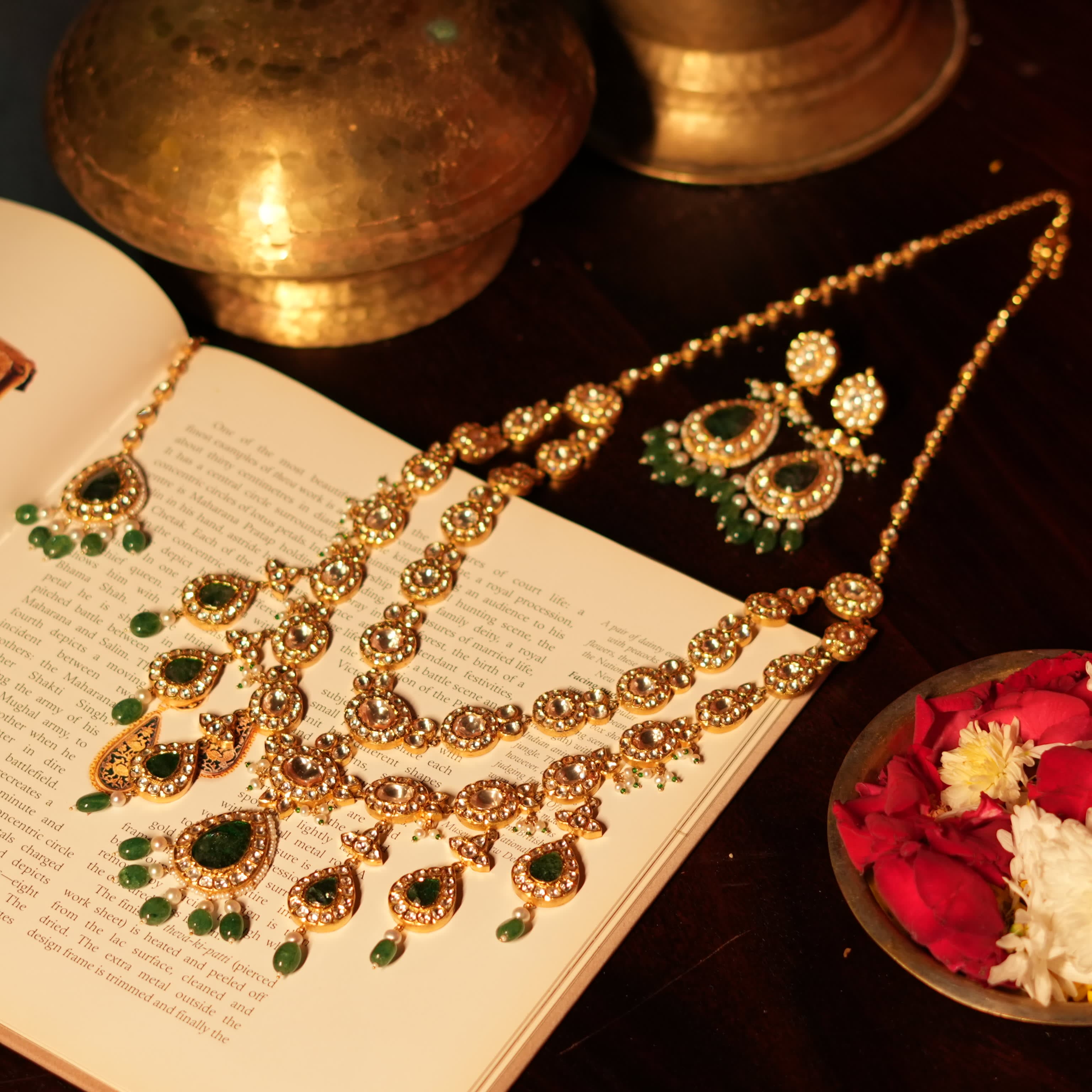
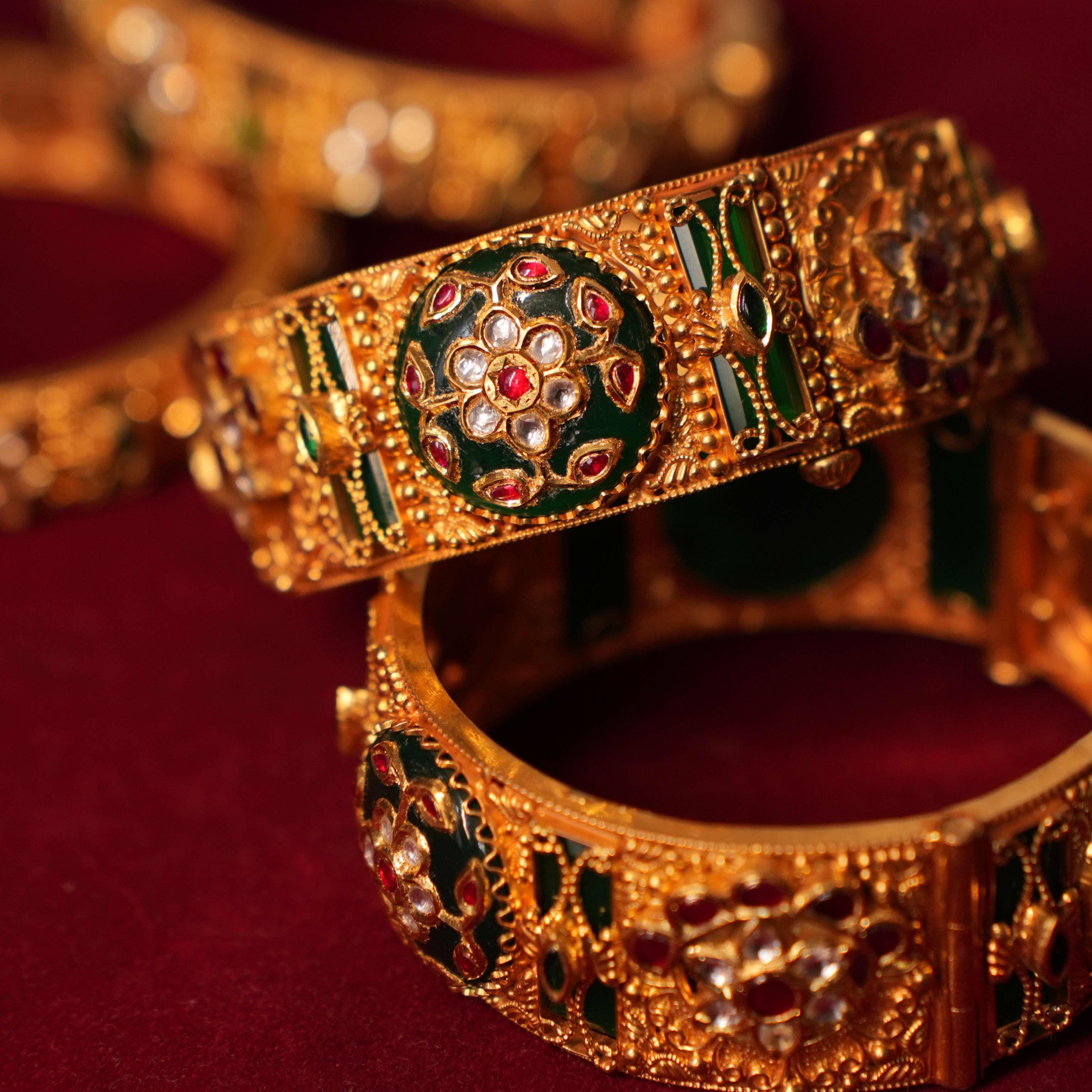
Emerald (Panna) - Represents Budh, Mercury. Associated with intellect, communication, and commerce. The finest navratna emeralds have a deep, saturated green with natural inclusions known as jardin.
Yellow Sapphire (Pukhraj) - Represents Guru, Jupiter. Associated with wisdom, prosperity, and spiritual growth. Jupiter is considered the most benefic planet, making the yellow sapphire one of the most auspicious stones.
Diamond (Heera) - Represents Shukra, Venus. Associated with love, beauty, luxury, and creativity. In traditional navratna pieces, a small, clear diamond is used rather than a large solitaire.
Blue Sapphire (Neelam) - Represents Shani, Saturn. This is the most powerful and most cautiously approached stone in the navratna. Associated with discipline, justice, and karmic lessons. Astrologers often recommend wearing it only after careful consideration.
Hessonite Garnet (Gomed) - Represents Rahu, the ascending lunar node. Associated with clarity of thought and protection from confusion and illusion.
Cat's Eye (Lehsuniya) - Represents Ketu, the descending lunar node. Associated with spiritual insight, detachment, and protection from unseen dangers.
Traditional Rules of Placement
In authentic navratna jewellery, the placement of stones is not arbitrary. The ruby always occupies the centre, with the remaining eight stones arranged around it in a specific geometric pattern. This arrangement mirrors the cosmic order, with each stone positioned relative to its planetary relationship to the Sun.
Traditional texts prescribe that the stones should touch the skin to allow their planetary energies to interact with the wearer's body. This is why many navratna rings and pendants are designed with open backs.
Beyond Astrology: The Design Appeal
Even for those who do not follow astrological beliefs, navratna jewellery has an undeniable aesthetic appeal. The combination of nine different coloured stones - red, white, orange-red, green, yellow, clear, blue, cinnamon, and chatoyant - creates a vibrant, living palette that works with virtually any outfit or occasion.
There is a reason navratna compositions have persisted for millennia: they are beautiful. The ancient system, whatever its spiritual origins, produced a colour combination that is remarkably harmonious.
Modern Navratna Interpretations
Contemporary jewellers are reimagining navratna in exciting ways. Minimalist navratna rings feature the nine stones in a sleek band setting. Navratna pendants place the composition within modern geometric frames. Even navratna bangles and earrings are finding new audiences among buyers who appreciate the colour play and cultural resonance.
The key is ensuring that the stones are genuine and properly identified. A true navratna piece uses specific stones for each planetary position - substitutions alter both the astrological and aesthetic composition.
Caring for a Navratna Piece
Because navratna jewellery contains stones of varying hardness - from diamond (10 on the Mohs scale) to pearl and coral (2.5-4) - care must be taken during cleaning. Avoid ultrasonic cleaners, which can damage softer stones. Clean gently with a soft, damp cloth. Store navratna pieces separately to prevent harder stones from scratching softer ones.
At SHRIVATSA, our navratna pieces use carefully sourced, natural gemstones set in traditional configurations. Whether you are drawn to navratna for its astrological significance or its timeless beauty, we ensure that every stone is genuine, every placement is correct, and every piece is worthy of the tradition it represents.